About Rear Window
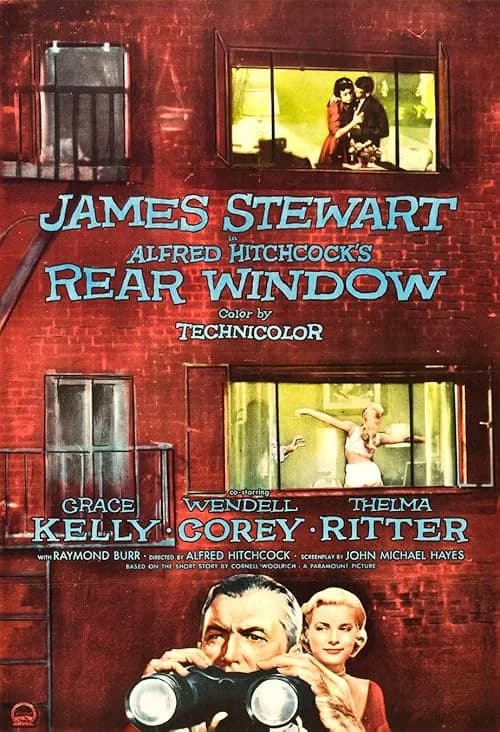
Alfred Hitchcock's 1954 masterpiece Rear Window remains one of cinema's most brilliant psychological thrillers. The film follows professional photographer L.B. 'Jeff' Jefferies (James Stewart), confined to his Greenwich Village apartment with a broken leg. Out of boredom, he begins observing his neighbors through his rear window, turning their lives into a private spectacle. His fascination turns to suspicion when he believes he's witnessed a murder in the apartment across the courtyard.
James Stewart delivers one of his finest performances as the increasingly obsessed Jeff, perfectly balanced by Grace Kelly's luminous turn as his sophisticated girlfriend Lisa Fremont. Hitchcock's direction is masterful, creating unbearable tension within a single apartment setting while exploring themes of voyeurism, morality, and urban isolation. The director transforms an ordinary courtyard into a microcosm of human drama.
Viewers should watch Rear Window not just as a perfect mystery, but as a masterclass in cinematic storytelling. Hitchcock builds suspense through meticulous framing and editing, making audiences complicit in Jeff's voyeurism. The film's single-location constraint becomes its greatest strength, creating claustrophobic intensity that builds to a heart-pounding climax. Over six decades later, Rear Window remains essential viewing for its perfect blend of suspense, character study, and technical brilliance that continues to influence filmmakers today.
James Stewart delivers one of his finest performances as the increasingly obsessed Jeff, perfectly balanced by Grace Kelly's luminous turn as his sophisticated girlfriend Lisa Fremont. Hitchcock's direction is masterful, creating unbearable tension within a single apartment setting while exploring themes of voyeurism, morality, and urban isolation. The director transforms an ordinary courtyard into a microcosm of human drama.
Viewers should watch Rear Window not just as a perfect mystery, but as a masterclass in cinematic storytelling. Hitchcock builds suspense through meticulous framing and editing, making audiences complicit in Jeff's voyeurism. The film's single-location constraint becomes its greatest strength, creating claustrophobic intensity that builds to a heart-pounding climax. Over six decades later, Rear Window remains essential viewing for its perfect blend of suspense, character study, and technical brilliance that continues to influence filmmakers today.